

From design to reality: how engineering collaboration drives performance
Even well-developed designs require alignment with real manufacturing conditions.
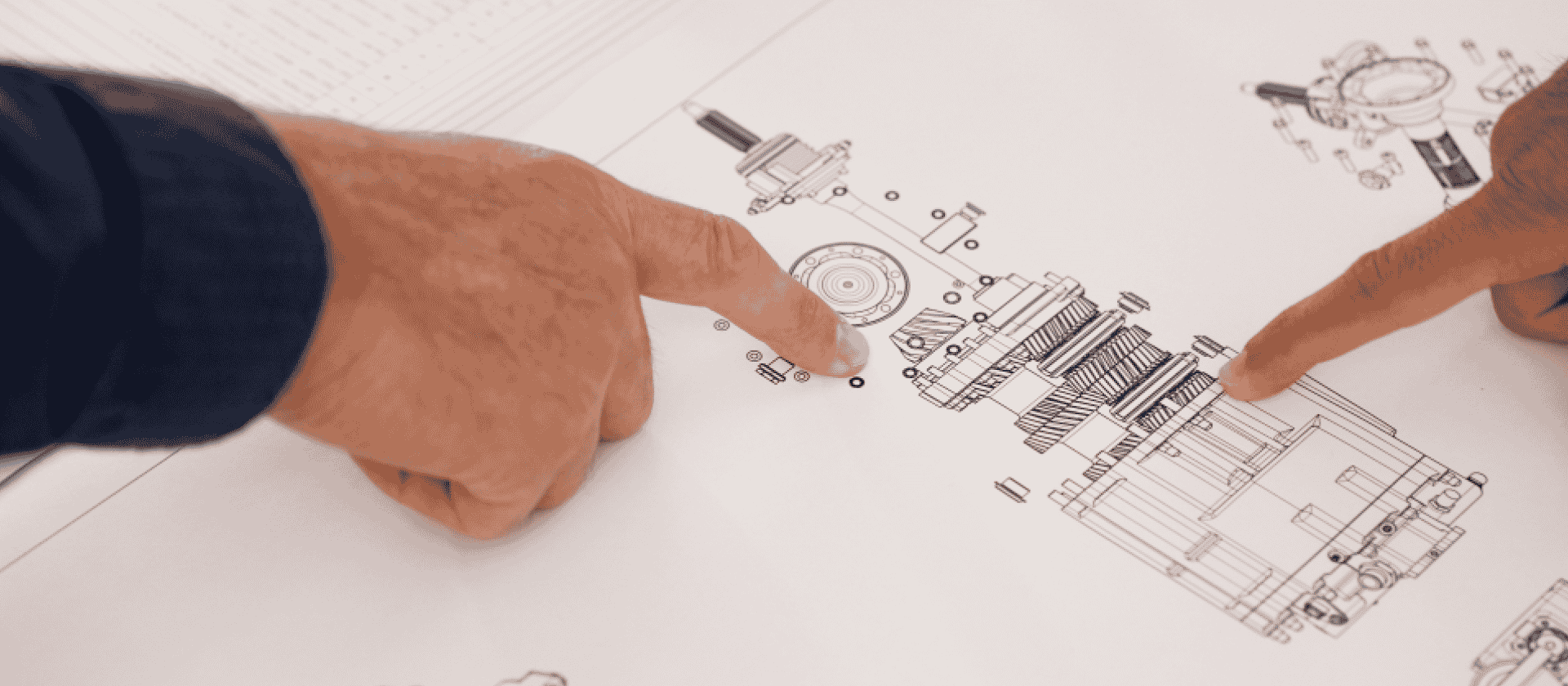
In the high-performance manufacturing sector, the real competitive challenge begins when the design intent must translate into a physical, industrialized, and repeatable solution. CIMA’s co-design steps into this exact strategic phase because, as Sales Manager Mirko Ramponi explains, “our customers usually come to us with projects that are already very well developed and a clear technical objective”.
Consequently, what clients are truly looking for “is not so much a revision of their work, but rather a technical exchange that helps bring their solution to a level of reliability and consistency with real industrial conditions”. The original concept is not modified, but rather enhanced. The value of this intervention lies “in validating it, strengthening it, and ensuring that all variables, materials, processes, and operating conditions, are properly aligned” securing project reliability before the machinery even starts running.
Engineering and production must operate as a connected system
To optimize efficiency and prevent it from dispersing along the supply chain, corporate functions cannot operate as silos. CIMA’s Engineering Manager Simone Grilli, clarify that “the gap arises when certain design choices, although theoretically correct, do not fully take into account the variability of manufacturing processes or the actual operating conditions”. This technological disconnect manifests concretely when “a very tight tolerance may be technically appropriate, but difficult to maintain consistently in production” or when “a material or heat treatment may perform well in theory, but prove sensitive to specific operating conditions or particular manufacturing sequences”.
To proactively resolve these technical conflicts, CIMA triggers structured co-design sessions where “we start from the analysis of the existing solution and, when needed, propose possible optimizations, explaining their impact both in terms of functionality and production”. The outcome of the service is a collaborative journey where the team supports the client by “highlighting the trade-offs between functionality, costs, and production stability” thereby establishing “an iterative process, where each decision is validated not only from a theoretical perspective, but also in relation to its practical applicability”.
Technical collaboration that enables more robust and efficient solutions
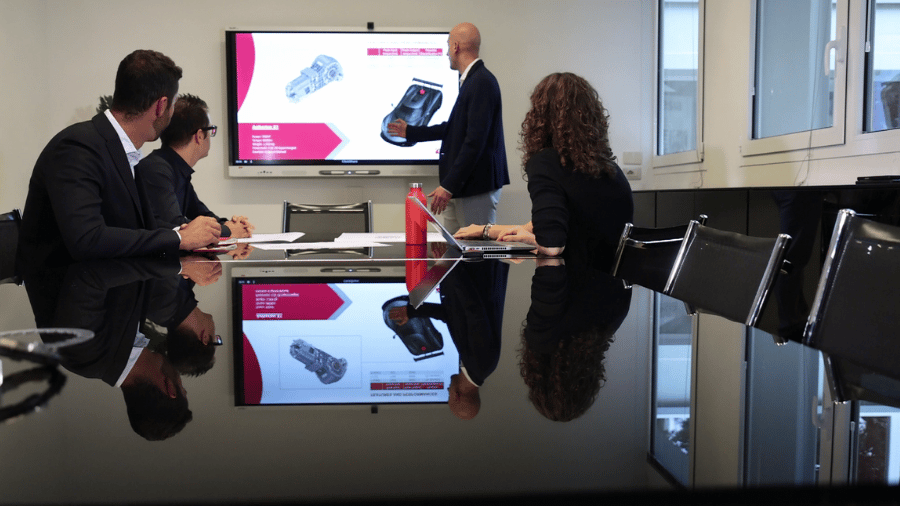
The solidity of this engineering methodology is fueled by the company's constant exposure to diverse markets. This cross-sector fertilization generates a unique wealth of expertise: “working across different sectors allows us to build a broad knowledge base that can be applied in different contexts”.
In the words of Grilli, this knowledge transfer ensures that “solutions developed for extreme applications, where functionality and reliability requirements are extremely demanding, can be adapted and transferred to industrial, racing or aerospace applications”. For the client, relying on such a background means counting on solutions already proven in critical sectors, reducing both development time-to-market and industrialization uncertainties.
Reliability and repeatability to ensure consistent performance in real applications
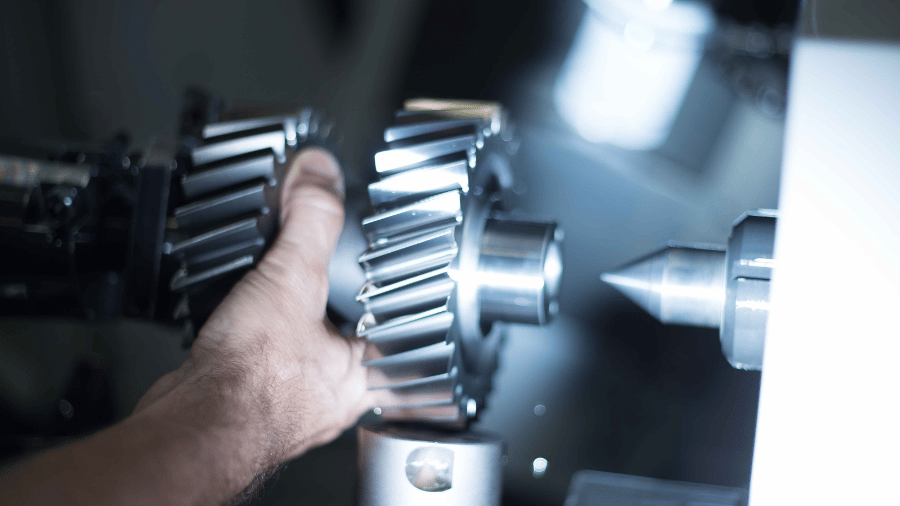
If design establishes the trajectory, the shop floor determines its practical feasibility by introducing direct experience with machinery. Workshop Coordinator Marco Bertocchi highlights that “production brings a very practical perspective, grounded in processes, lead times, and real variability” an essential on-field contribution capable of “highlighting issues related to a machining sequence or suggesting changes that simplify the process, with a positive impact on overall performance”.
This input is the definitive tool that “allows technical choices to be validated also from a feasibility standpoint,” moving past the logic and limits of a single prototype. A project that is perfect on paper but excessively sensitive to shop floor variables becomes an economic and logistical risk; on the contrary, “repeatability is essential because performance must be guaranteed across all parts, not just on a prototype”. Ensuring repeatability means protecting brand quality and performance over time and at scale.
Consequently, optimization becomes a daily, widespread responsibility across the lines, where “process improvement is not assigned to a single function, but is part of everyday work in production”. Machine operators intervene directly in material behavior because “they are the ones who detect deviations, issues, or opportunities for improvement” offering a fundamental contribution to “make the process more robust and faster over time, not only based on theoretical analysis but also on direct experience”.
Performance depends on the integration of design, materials, processes, and quality requirements
Within this connected workflow, the Quality Department integrates early on to prevent critical issues from emerging only right before delivery. Quality Manager Omar Gambuzzi explains that “quality comes into play when technical solutions start to be defined and need to be consolidated in view of production” a moment in which “it is important to verify that the choices made, for example regarding tolerances, heat treatments, or processes, are sustainable and aligned with requirements for stability and process repeatability”.
Delaying this verification represents a systemic hazard, given that “the main risk is treating quality-related aspects only in the later stages, when certain decisions are already difficult to modify”. CIMA responds by “working on the verification and consolidation of technical choices” and, as Gambuzzi concludes, “we analyze critical characteristics such as post-treatment deformation, dimensional accuracy, or process stability, to ensure that the component can consistently maintain the required performance”.
Technical partnership as a competitive accelerator
Passively satisfying a drawing specification versus actively contributing to a complex solution defines the boundary between a traditional supplier and a strategic partner. While pure supply limits itself to replicating a predefined geometry, a partnership pushes further into the client's application, validating its manufacturability and resistance on the field.
CIMA's true differentiating value lies precisely in this native ability to bridge the gap between bold design and manufacturing reality. By leveraging cross-functional engineering expertise, cutting-edge workshop technologies, and a culture of preventive quality, CIMA transforms technical collaboration into a powerful competitive accelerator for the global market.